



Why Choose Our Linear Motor Brass Wire EDM
♦ Ultra-High Precision:0.1 μm full closed-loop servo control ensures outstanding accuracy and long-term stability.
♦ Faster Machining:Linear motor drive and optimized cutting technology increase efficiency while reducing cycle time.
♦ Intelligent Automation:Automatic hole recovery and resume machining improve productivity with minimal operator intervention.
♦ Stable & Reliable Cutting:Real-time discharge monitoring minimizes wire breakage and delivers consistent machining performance.
♦ Flexible Multi-Axis Capability:Supports up to 7-axis, 6-axis simultaneous control for complex and high-precision applications.
♦ Lower Operating Costs:Dual-servo wire feeding reduces maintenance requirements and extends machine service life.
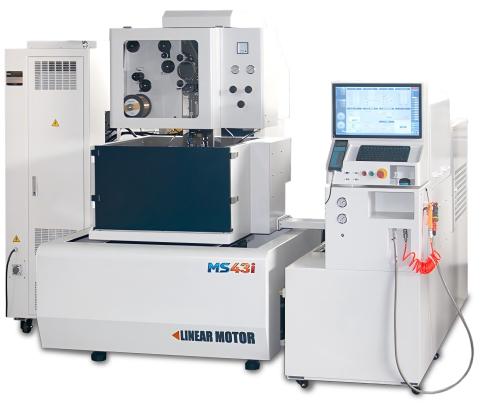
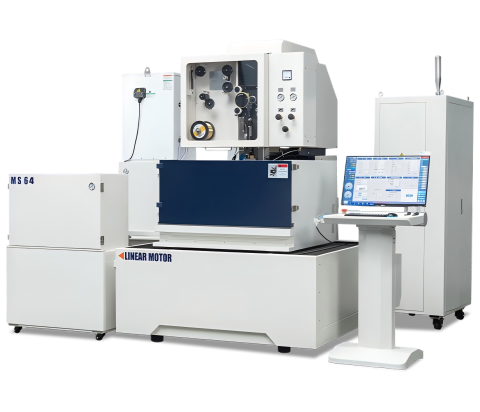
- MS Series
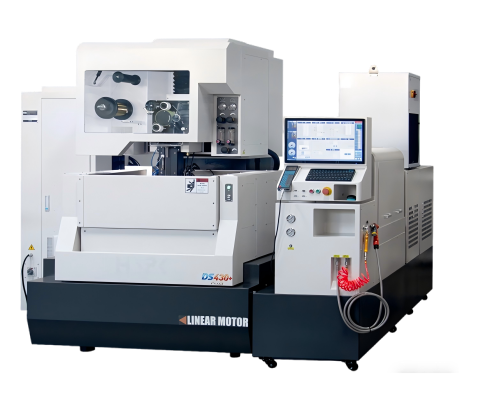
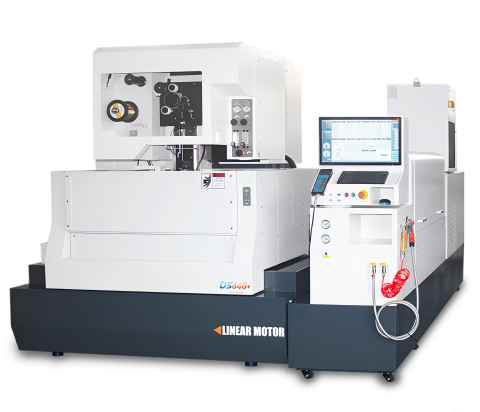
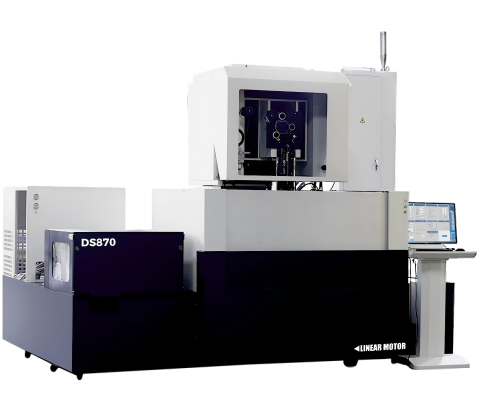
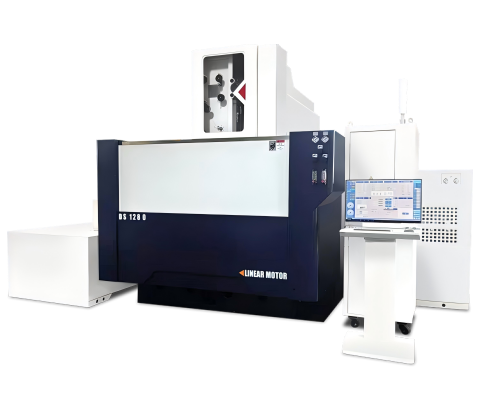
- DS Series
| Model | MS43i | MS64 |
| X-Y axis travel | 400×300mm | 600×400mm |
| U-V axis travel | 100×100mm | 100×100mm |
| Z axis travel | 220mm(Machining height by Fully submerged 190mm) | 350mm(Machining height by Fully submerged 320mm) |
| Maximum machining workpiece size | 780×650×210mm | 1000×800×340mm |
| Maximum workpiece load weight | 400KG | 600KG |
| The height of the workbench from the ground | 950-1000mm | 950-1000mm |
| Programmable axis count | 5-axis(X,Y,Z,U,V) | 5-axis(X,Y,Z,U,V) |
| Worktable size | 630*480mm | 860*570mm |
| Maximum dry run speed | 1500.0 mm/min | 1500.0mm/min |
| Wire diameter | 0.15~0.3mm | 0.15~0.3mm |
| Maximum load of wire spool | 10KG | 10.0KG |
| Maximum wire tension | 0.5~2.4KG | 0.5~2.4KG |
| Maximum wire winding speed | 18m/min | 18m/min |
| Maximum machining angle of taper | ±15°/80mm wide-angle wire guide is required | ±15°/180mm wide-angle wire guide is required |
| Machine weight | 2500kg | 3200kg |
| Mechanical dimensions | 2730×2285×2160mm | 3200×2300×2350mm |
| Tank capacity | 850L | 1100L |
| Model | DS430 PLUS | DS640 PLUS | DS870 | DS1280 |
| X-Y axis travel | 400x300mm | 600×400mm | 800×700mm | 1200×800mm |
| U-V axis travel | 100x100mm | 100×100mm | 200×200mm | 200×200mm |
| Z axis travel | 250mm(Machining height by Fully submerged 220mm) | 300mm(Machining height by Fully submerged 270mm) | 400mm(Machining height by Fully submerged 370mm) | 500mm(Machining height by Fully submerged 470mm) |
| Maximum machining workpiece size | 840×750×240mm | 1030×850×290mm | 1400×1170×395mm | 1700×1250×495mm |
| Maximum workpiece load weigh | 600kg | 800kg | 5000kg | 5000kg |
| The height of the workbench from the ground | 900~950mm | 900~950mm | 990-1030mm | 990-1030mm |
| Programmable axis count | 7-axis(X,Y,Z,U,V,W,B) | 7-axis(X,Y,Z,U,V,W,B) | 5-axis(X,Y,Z,U,V) | 5-axis(X,Y,Z,U,V) |
| Worktable size | 630*480mm | 860*570mm | 1130*930mm | 1520*1080mm |
| Maximum dry run speed | 1500.0mm/min | 1500.0mm/min | 1500.0mm/min | 1500.0mm/min |
| Wire diameter | 0.15-0.3mm | 0.15-0.3mm | 0.15-0.3mm | 0.15-0.3mm |
| Maximum load of wire spool | 10.0KG | 10.0KG | 10.0KG | 10.0KG |
| Maximum wire tension | 0.5~2.4KG | 0.5~2.4KG | 0.5~2.4KG | 0.5~2.4KG |
| Maximum wire winding speed | 18m/min | 18m/min | 18m/min | 18m/min |
| Maximum machining angle of taper | ±15°/80mm wide-angle wire guide is required | ±15°/80mm wide-angle wire guide is required | ±15°/80mm wide-angle wire guide is required | ±15°/180mm wide-angle wire guide is required |
| Machine weight | 3400kg | 3800kg | 8500kg | 10000kg |
| Mechanical dimensions | 2700×2500×2300mm | 2800×2700×2400mm | 3790×4340×2610mm | 4900×4100× 3000mm |
| Tank capacity | 850L | 1100L | 1600L | 3700L |
Intelligent CNC Control System
- 100% Self-Developed Controller: Designed in-house for intuitive operation, high reliability, and continuous performance optimization.
- High-Speed DSP Processing: Advanced DSP technology enables real-time signal processing and precise control of complex machining paths..
- Efficient Technical Support: Complete ownership of core technologies allows our R&D team to provide fast, reliable, and cost-effective after-sales service.
Advanced Machining Functions
- Built-in Parameter Database: Integrated machining conditions with optional parameter libraries simplify setup and optimize processing performance.
- High-Speed Graphics Processing: A powerful CPU delivers fast drawing speeds and smooth system operation for improved productivity.
- Precision Motion Control: BYPASS functionality and advanced corner/arc control enhance automation, improve machining accuracy, and ensure stable cutting performance.
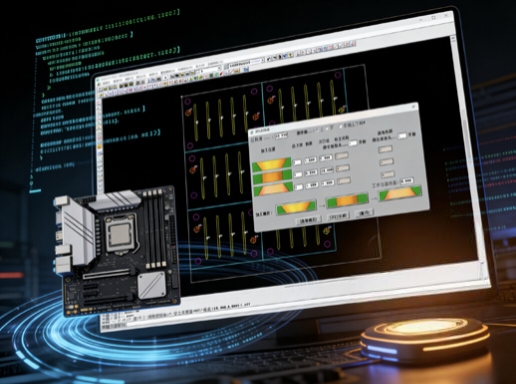
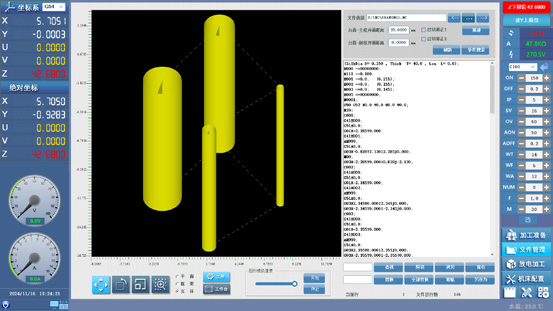
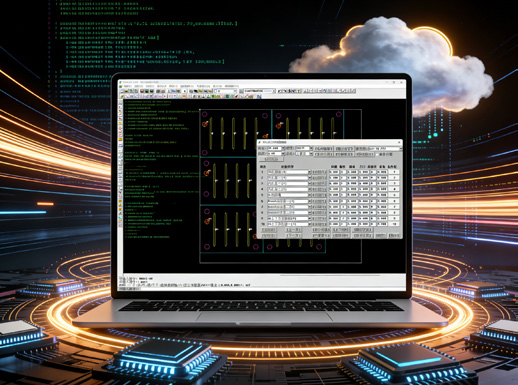
Upgraded Three Core Functions of CAD
- Intelligent Corner Cleaning Precisely processes sharp corners and specialshaped holes,reduces wire consumption, and improves mold assembly accuracy.
- Flexible Arc Offset & Equal Expansion Ensures smooth and error-free operation,adapts to various machining compensation requirements,and efficiently optimizes arc profiles.
- Efficient Parameter Search with Built in Processing Library Quickly matches parameters according to material, thickness and wire diameter,reduces trial-and-error costs, and improves yield rate.
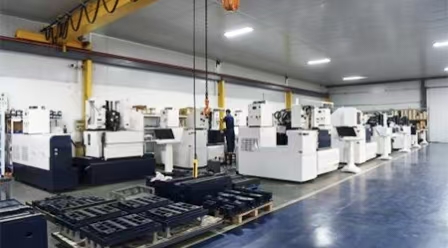
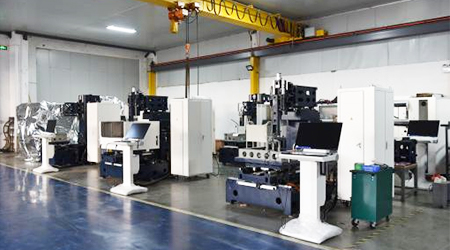
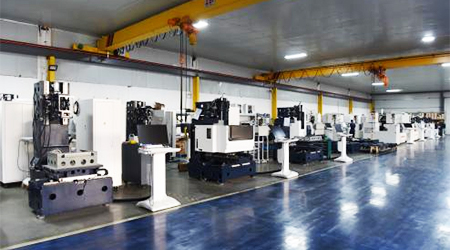
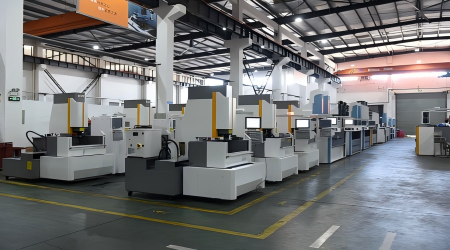
Brass wire EDM workshop
Slow Wire EDM vs. Medium Wire EDM: Understanding the Difference
Slow Wire EDM and Medium Wire EDM are both precision electrical discharge machining technologies, but they differ in wire usage, machining performance, and application fields. Understanding their characteristics helps you choose the right solution for different machining requirements.
1. Wire Usage & Machining Process
Slow Wire EDM uses continuously supplied brass wire as a single-use cutting electrode, while Medium Wire EDM uses reusable molybdenum wire that moves back and forth during cutting. This difference directly affects machining cost, accuracy, and processing methods.
2. Precision & Surface Quality
Slow Wire EDM provides higher machining accuracy and excellent surface finish, making it ideal for precision molds, complex parts, and high-value components. Medium Wire EDM offers reliable accuracy with better cost efficiency for general precision machining.
3. Cutting Efficiency & Operating Cost
Medium Wire EDM has lower consumable costs due to the reusable molybdenum wire, making it suitable for long-term production with cost control requirements. Slow Wire EDM focuses more on ultimate precision and fine surface requirements.
4. Application Fields
Slow Wire EDM is widely used in industries requiring high precision, such as aerospace, medical equipment, automotive molds, and precision components. Medium Wire EDM is commonly applied in mold manufacturing, tooling, and general industrial part processing.
5. Choosing the Right EDM Solution
The choice between Slow Wire EDM and Medium Wire EDM depends on the balance between accuracy, surface quality, processing efficiency, and production cost. Selecting the right machine ensures better machining performance and higher economic value.